Categories
Energy Efficiency: Are We Asking the Right Questions?
From CFCs to HFCs: understand the evolution of refrigerants, why R-32 is the most promising alternative, and how it cuts emissions and costs compared to R-410A in Brazil.
By Alexandre Schinazi
Oct 14, 2021
Energy Efficiency
“Where can I find an efficient, high-quality light bulb?”; “Which air conditioning unit is more economical in the long run?”; “Do solar panels offer a good payback?” These are common questions heard today, both in the corporate and residential worlds. Many people and companies have already realized that energy efficiency is a point of no return; they have seen that, besides being a good financial investment, it brings multiple benefits to those who incorporate it into their daily lives. However, are these the right questions to ask?
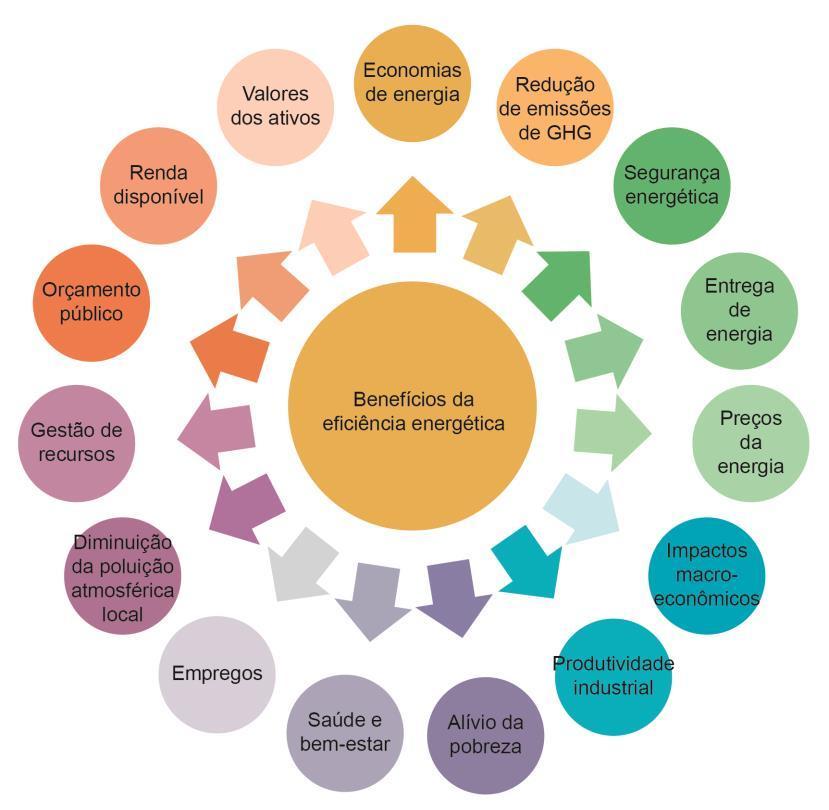
According to the International Energy Agency (IEA), the term “multiple benefits” seeks to capture the reality that investments in energy efficiency bring many advantages to many different actors, beyond just reducing energy demand and greenhouse gas emissions (IEA, 2019). For a company, investing in energy efficiency projects means staying up to date with the market and meeting a customer base that is increasingly demanding regarding issues of equity, gender, and sustainability. Access to financiers and investment is increasingly linked to a company's social and environmental responsibility. The Sustainable Development Goals (SDGs) and the reduction of carbon emissions have tangible business value, and their importance is now mainstream, no longer perceived only by environmental activists.
One of the most heard acronyms in the corporate world today, ESG (Environmental, Social, and Governance), is proof that companies need to incorporate practices that increase their positive impact on the world to avoid falling behind. Organizations must be able to demonstrate transparent and ethical internal governance structures; act according to principles of equity and social justice—including revising their own hiring and diversity policies; and promote initiatives to protect natural resources, reducing pollutants and positively impacting the environment. It is in the environmental aspect—the “E” in the acronym—that energy efficiency can be a major ally for a company, offering possibilities to reduce waste and become more competitive, while improving its conditions to attract investment and customers thanks to a higher ESG ranking. After all, the ESG movement is driven primarily by investors themselves.
For a country, energy efficiency is the cheapest and fastest way to maintain a healthy balance of energy supply versus demand. Robust and well-structured programs, public policies—whether compulsory or voluntary—and government incentives for energy efficiency postpone the need to build new power generation plants, which are more expensive. Energy efficiency is a strategic asset for a country, linked to its energy security, autonomy, and the cost of its energy sector. Brazil is currently experiencing its worst water crisis in over 90 years and, with it, a serious energy crisis, having to activate its thermal power plants at a very high level, increasing electricity tariffs for the entire population and still running the risk of not being able to meet the national electrical demand in the coming months. Much more agile and permanent work to combat energy waste is necessary through rigorous policies, such as mandatory audits, and actions that bring the government closer to large consumers, such as demand response programs.
If it is so evident that energy efficiency is beneficial for companies, countries, and societies, why does it seem to progress so slowly? Let’s go back to our questions from the beginning of the article, so common in the daily lives of people interested in fighting waste. “Efficient light bulbs?” They are not hard to find. Of course, not just any LED bulb is of good quality; it is important to require the Inmetro seal, check the luminous flux and luminous efficacy, be careful in specifying the color temperature and color rendering index, and ensure an installation with good power quality. But it is possible to find good bulbs, and that is not the bottleneck. “Efficient climate control devices?” They aren’t hard to find either. Again, great care must be taken in choosing equipment, maintaining a critical view of Inmetro efficiency tables and a slightly suspicious eye toward manufacturers' marketing, considering smarter technologies like inverter equipment (in the case of splits), keeping an eye on the system’s COP (coefficient of performance) and the use of a refrigerant fluid that does not harm the environment, and having a trusted advisor to help verify that the sizing proposed by the air conditioning designer—or the store salesperson—is appropriate for your real needs. A bit more complex than a light bulb, true, but again, there are good professionals and excellent equipment on the market, and a bit of careful research and a network that allows for a good support system makes the project move forward. Finding efficient equipment is not the bottleneck.
In short, an energy efficiency project generally does not fail to happen because of technical doubts about where to find efficient technologies. Although the quality of the technical specification is important for a project to be successful, focusing too much on this issue delays the search for solutions to the bottlenecks that actually prevent projects from being realized. The biggest barriers reported by building or municipal managers are a lack of: time, human resources/dedicated staff, technical knowledge within their team, governance structure, competence to perform energy audits, approval from superiors (directors, secretaries), and expertise in obtaining financing, bidding, and contracting.
Up to this point, we are discussing efficiency projects that require investments, proposing that the greatest challenge is not related to technology, but rather to the structuring of the project as a whole. Added to this finding is another perception: energy efficiency is not synonymous with equipment replacement. On the contrary, there are large savings available at low or even no cost. Called “quick wins,” the simple execution of a periodic energy audit reveals operational practices that can be altered and optimized, related to factors such as operating hours, equipment setpoints, or other pre-programmed parameters, training of the team operating the building systems, and behaviors that can be improved.
What, then, is the difference between companies, cities, or countries that have already succeeded in implementing robust efficiency programs and those that have difficulty performing improvement actions? What is the key to reducing costs, decreasing energy demand, and obtaining multiple benefits, while simultaneously overcoming various barriers and addressing both low-cost operational opportunities and high-cost, high-complexity measures? What can be more important than efficient technology?
The way forward is to develop a good Energy Management System (EnMS). The management system is based on the PDCA (plan-do-check-act) cycle and has as its basic premise the involvement and commitment of the organization's leadership. The first step is the creation of an energy policy—this is where general guidelines, objectives, and responsibilities are established. Next, the P (plan) stage refers to performing energy audits, an essential step that leads to identifying the opportunities with the best cost-benefit for the organization, followed by the development of a structured action plan, starting with the quickest and cheapest improvements and planning the complex and expensive ones for a future moment.
All subsequent company actions related to energy must be guided by the energy policy. This in itself is a major change from the common practice of seeking improvements only when there is an urgent need—be it a financial crisis, a change in management, a new directive from the company's global headquarters, or new local legislation. The insertion of all energy efficiency actions—both operational and those requiring investment—within the context of a robust EnMS brings lasting savings and many more benefits (Figure 2 and Figure 3).
The concept of energy management can be applied by any type of organization, including companies, municipalities, buildings, industries, or even countries. There are guidelines to help with its implementation, such as the NBR ISO 50.001:2018 standard. In addition, many tools and guides have been developed to assist organizations in various stages of their energy management, such as the Energy Brain software for implementing energy audits with automatic calculations; the SampaEnergia tool (developed for the municipality of São Paulo to monitor the implementation of energy efficiency actions in municipal public buildings); the Interactive Guide for Energy Efficiency in Buildings; the Practical Guide for Urban Investment Preparation: Energy Efficiency and Solar Photovoltaic Energy in Public Buildings (FELICITY Guide); and the Ministry of Mines and Energy website dedicated to supporting the implementation of ISO 50001.
The key question, therefore, is not “where can I find an efficient, high-quality light bulb.” The key questions should be: “How do I get my board of directors involved?”; “How do I train my team in the disciplines of design, financing, bidding, and contracting for energy efficiency projects?”; “How do I perform an energy audit to see all my savings opportunities?”; “Where do I start to create an energy policy and a good management system?” Organizations that are asking these questions are already ahead, measuring their savings and positioning themselves as market leaders. Energy efficiency is the way forward. The technologies exist and are available. It is up to political will and internal organization to make it happen.
This article was originally published in the 181st Edition of the magazine "O Setor Elétrico" (August/September).
Access the full edition at: setorElétrico